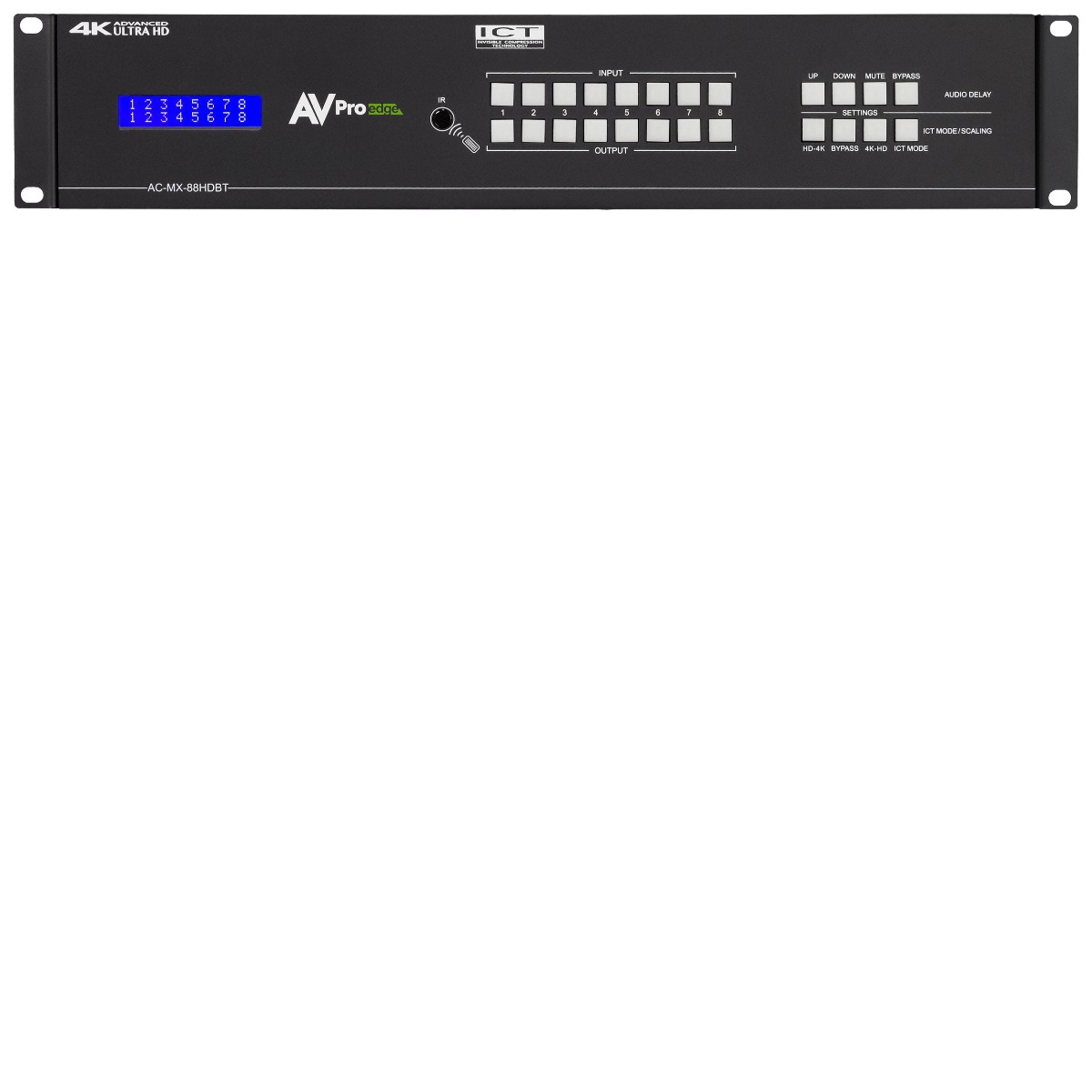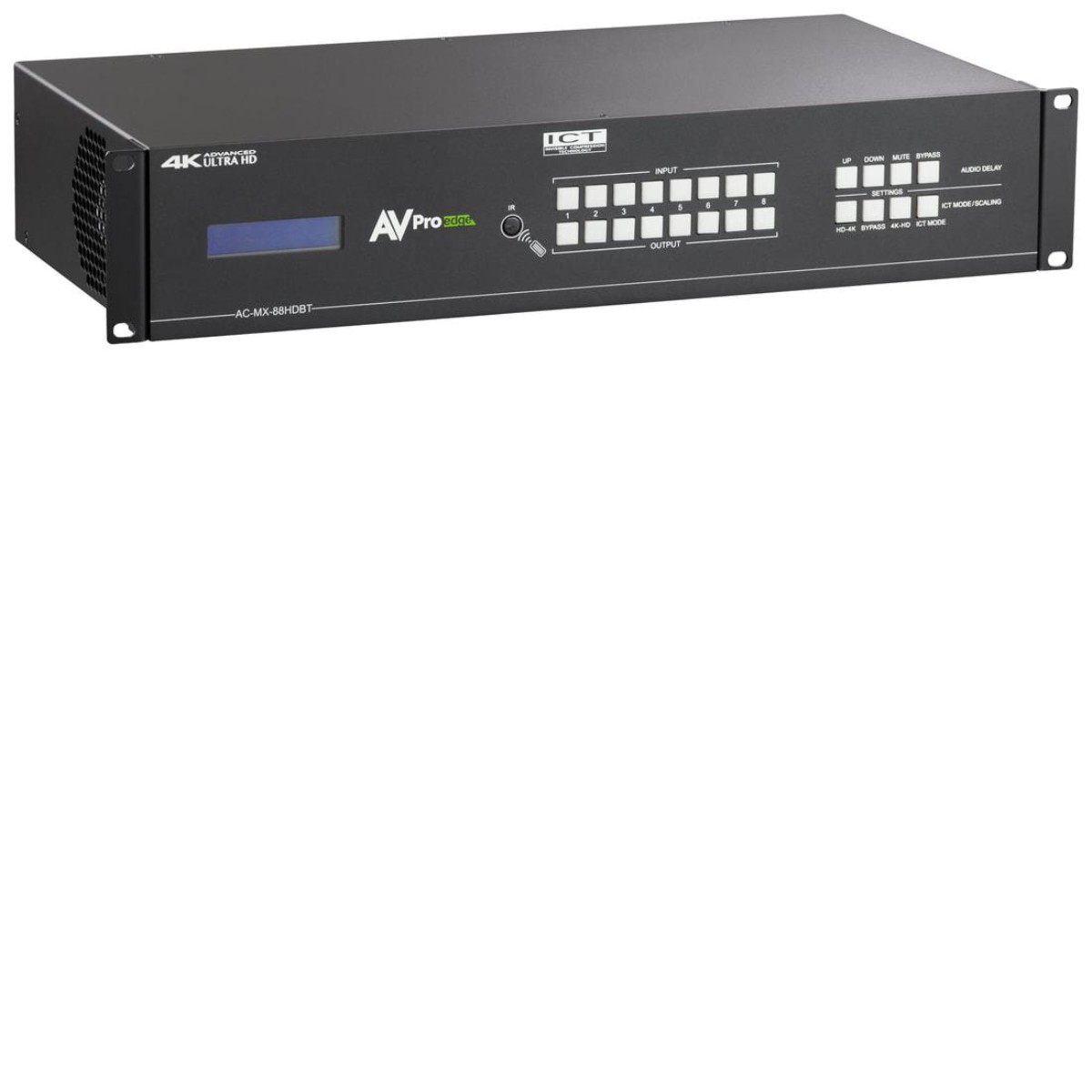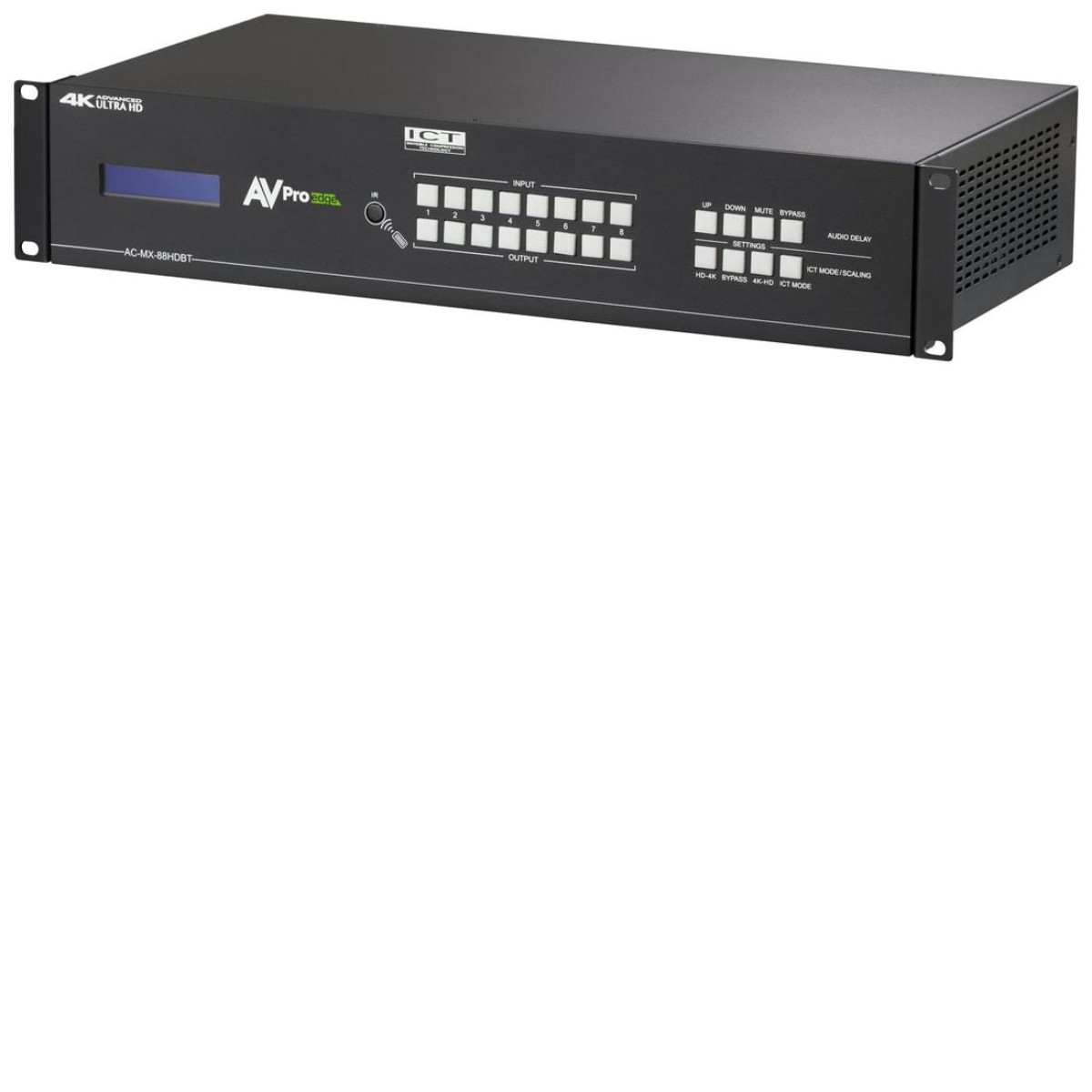

AVPro Edge AC-MX-88HDBT
18Gbps 4K60 4:4:4, 8x8 Matrix with Mirrored HDMI & HDBaseT Outputs
- HDMI 2.0(a/b)
- 18Gbps Uncompressed Bandwidth Support on HDMI
- 18Gbps with ICT on HDBaseT outputs
- 4K60 4:4:4 Support



Description
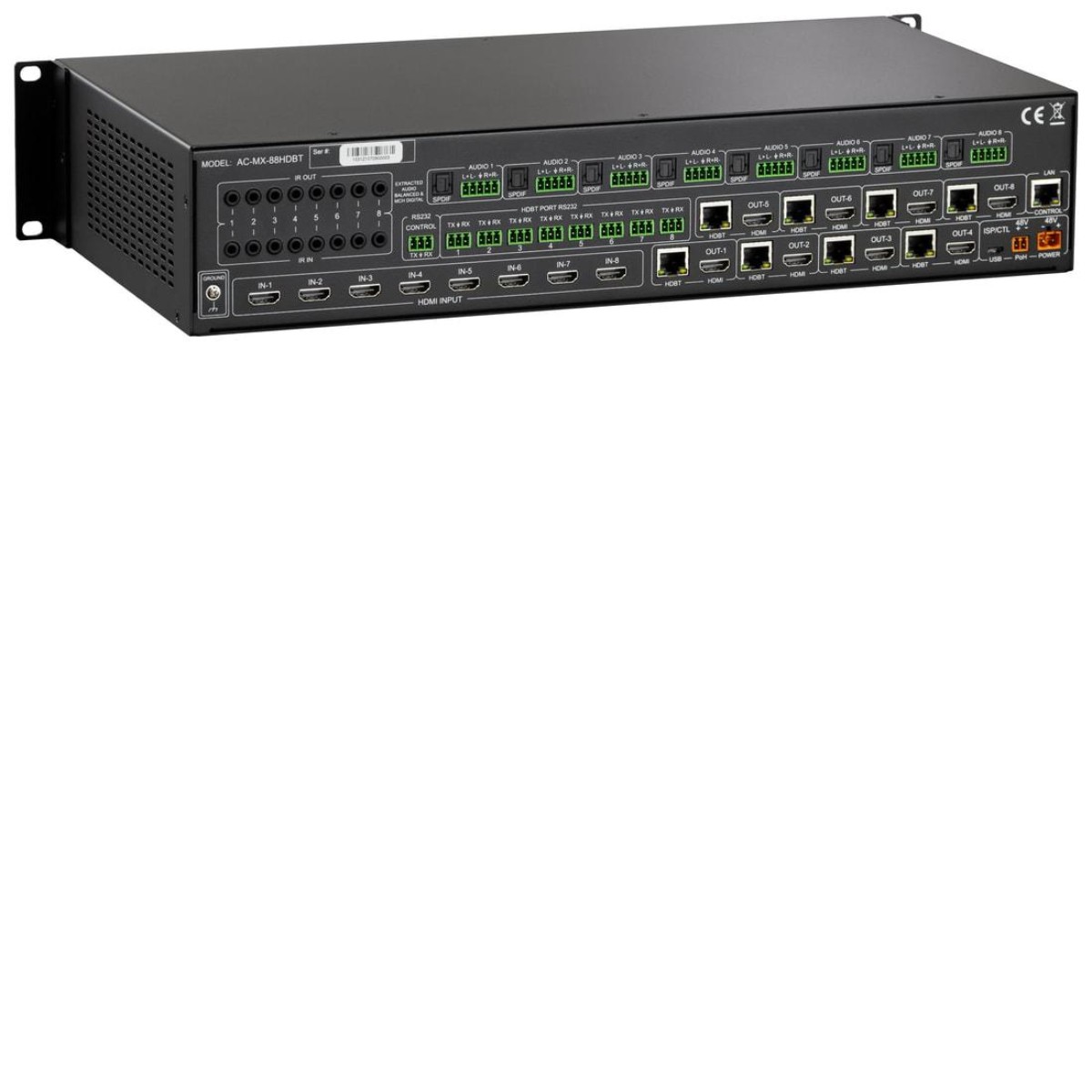
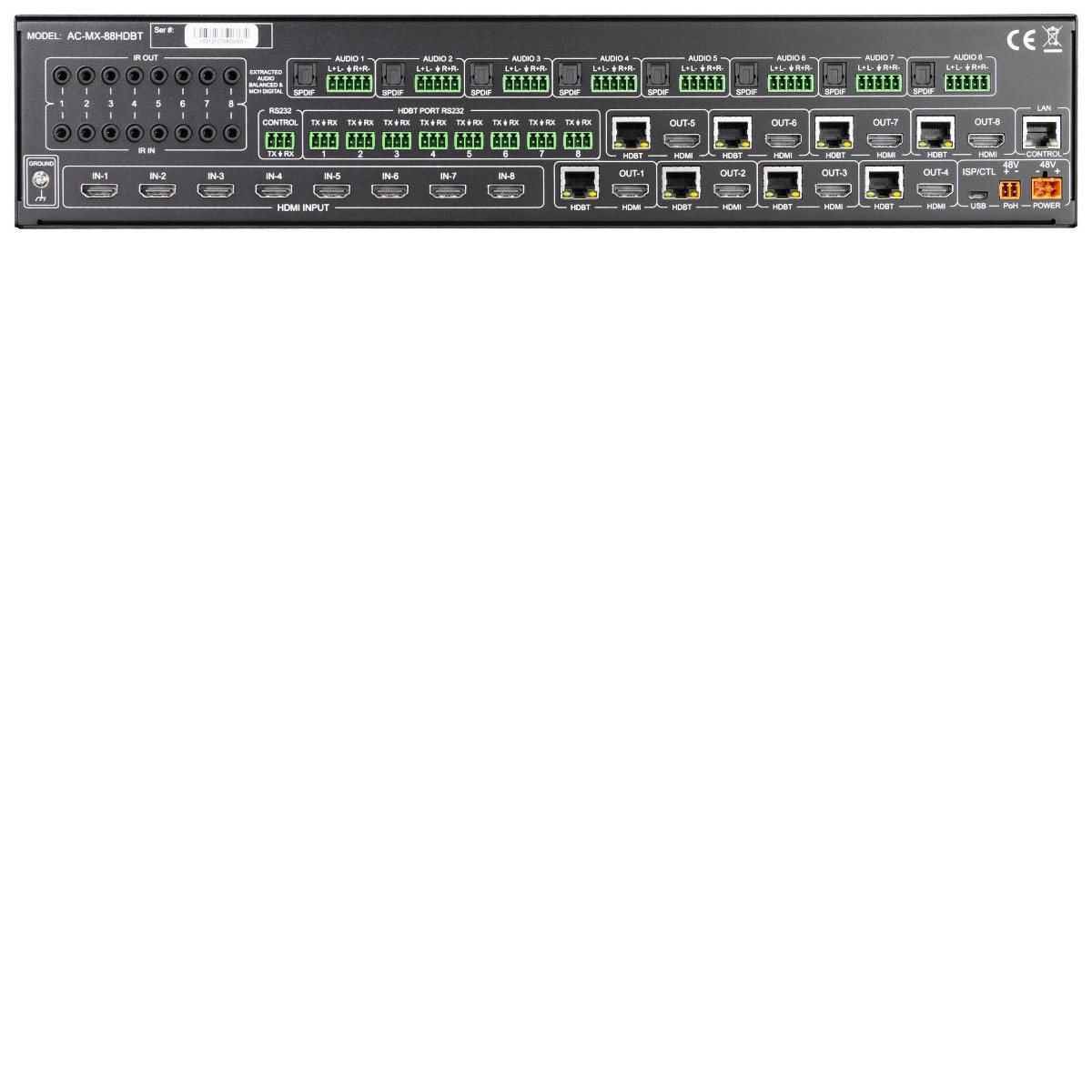
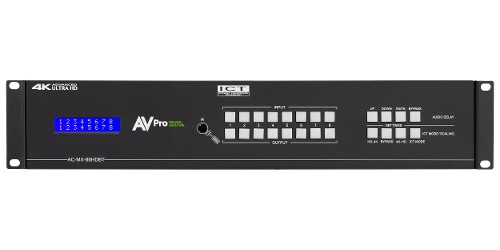
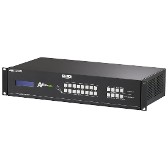
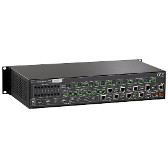
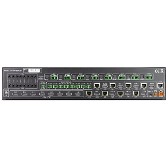
The AVPro Edge AC-MX-88HDBT is an 8x8 matrix switcher that routes any of eight HDMI sources to any of eight displays, with every output offering both an HDMI port and an HDBaseT port at the same time.
The two ports mirror each other and both stay active, so a display at the rack can use HDMI while a remote display receives the same signal over category cable. The matrix supports HDMI 2.0(a/b), HDCP 2.3, 4K video and up to 18 Gbps of bandwidth.
What sets it apart is ICT, AVPro Edge's Invisible Compression Technology, built into the HDBaseT outputs. ICT fits 18 Gbps signals, including 4K60 4:4:4 and every flavor of HDR, through a category cable, preserving HDR metadata, color information and 12-bit deep color.
Side-by-side testing against a directly connected source used two identical displays, and evaluators could not tell which one was using ICT. Pair the outputs with AC-EX70-444-RNE receivers to reach displays up to 70 meters away at 4K.
Not every display can take 18 Gbps, so HDBaseT Compatibility Mode (HDBT-C) converts high-bandwidth signals between 9 and 18 Gbps for displays or third-party extenders that cannot. It is set per output, which means only the runs that need it are down-clocked. Each output also has a built-in scaler, so a 4K source can be downscaled for older displays instead of dropping the whole system to 1080p.
Common installation problems are handled on board. Audio delay is adjustable to fix lip-sync before it becomes a complaint, EDID management gives you flexibility across a wide mix of sources and displays. The matrix equalizes and amplifies each HDMI output so long HDMI cables do not degrade the signal. Compatible sources include Blu-ray and UHD Blu-ray players, satellite receivers, game consoles and PCs.
Key Features
- 8x8 routing: eight HDMI inputs to eight outputs, each with mirrored HDMI and HDBaseT ports.
- ICT on HDBaseT: 18 Gbps, 4K60 4:4:4 and full HDR through category cable.
- HDBT-C mode: per-output conversion for displays or extenders that cannot take 18 Gbps.
- Built-in scalers: downscale 4K for legacy displays on a per-output basis.
- Audio delay and EDID: fix lip-sync and handshake issues from the matrix itself.
- HDMI 2.0 and HDCP 2.3: compatible with current UHD sources and protected content.
Design and Installation Notes
Typical system layout: connect up to eight sources, such as UHD Blu-ray players, satellite receivers, game consoles, PCs and media players, to the HDMI inputs. Use the HDMI output on any block for a display at the rack, and the HDBaseT output for remote displays.
Each remote display needs a compatible receiver; the AC-EX70-444-RNE-P includes its own 48V power supply for standalone use. Cat 6a is recommended for the longest runs.
Working with third-party extenders: scaling on the HDBaseT outputs lets you step 4K down to 1080p for compatibility with third-party HDMI extenders. HDBT-C lets HDR and gaming content in the 9 to 18 Gbps range reach transmitters or displays that stop at lower bandwidth. Since, both settings are made per output, one display can stay at full 18 Gbps while another is down-clocked.
Why choose an integrated HDBaseT matrix? With HDBaseT built into every output, you do not need a separate transmitter for each remote display, which saves rack space, cabling and cost in an 8-display system. It is the larger sibling of the 4x4 AC-MX-44HDBT, so you can choose the size that matches your sources and displays.
Typical Applications
Suited to corporate AV, higher-education lecture spaces, command centers, hospitality and larger home theaters that mix local and remote displays. For a smaller system, see the AC-MX-44HDBT or, if you do not need HDBaseT outputs, the AC-MX-88. Browse the full range of HDBaseT-output matrix switchers.
Frequently Asked Questions
Are the HDMI and HDBaseT outputs active at the same time?
Yes. Each output block mirrors its HDMI and HDBaseT ports, and both are active, so you can feed a local display and a remote one with the same source.
Do I need a receiver at each remote display?
Yes. The HDBaseT outputs connect to a compatible receiver at the display, such as the AC-EX70-444-RNE or AC-EX70-444-RNE-P.
What does HDBaseT Compatibility Mode do?
HDBT-C converts high-bandwidth signals between 9 and 18 Gbps for displays or third-party HDBaseT extenders that cannot handle full bandwidth. It is set per output.
Can it downscale 4K for older displays?
Yes. Each output has a built-in scaler, so a 4K source can be downscaled where a display requires it while other outputs stay at native resolution.
Specifications
- Full HDR Support (HDR 10 & 12 Bit)
- Dolby Vision, HDR10+ and HLG Support
- HDCP 2.3 (and all earlier versions supported)
- 1080p > 4K Upscaling on HDMI outputs
- 4K > 1080P Downscaling on HDBaseT outputs
- Advanced EDID Management
- IR, RS-232 and LAN Control Options
- Digital Toslink Out (7CH PCM, DD, DTS)
- Balanced Analog Out (2CH PCM)
- Audio Delay for Digital & Analog Out
- HDBaseT Compatibility mode for mixed systems
- Driver Support for Crestron, C4, RTI, ELAN and more
Downloads
Reviews
Write a Review